
So what makes a walk a pilgrimage?
Beginnings
As many of you know, I’m a walker. I’ve taken walks in the UK and in Europe for the sheer enjoyment of being outdoors in nature and bringing friends and family together. When I have something big to reflect on or a feeling that’s not quite settling, I take them all out for a walk. Nature and the outdoors are integrated into my coaching practice, and I recognise first hand that a good walk can lead to better, bolder decisions and profound personal transformation.
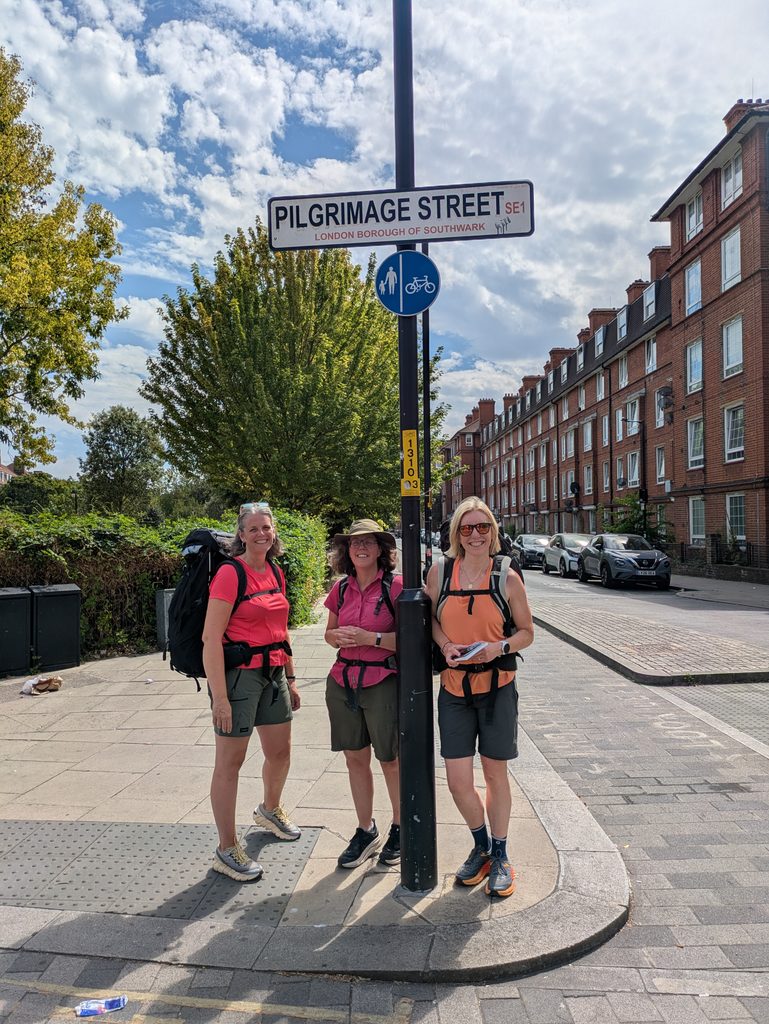
This summer, with a small group of friends, I walked 100 miles from Southwark in London to Canterbury in Kent. It’s a pilgrimage route humans have trodden for many centuries. So what is it that turns a regular walk into a pilgrimage?
Tradition
Pilgrimage is deeply embedded into traditions across the world. We can think of pilgrimage as a religious experience (the Hajj to the sacred city of Mecca, the Camino de Santiago, the Kumbh Mela) a spiritual quest, a journey about seeking answers, discovering ourselves or simply as dedicated time for reflection.
The Pilgrimage Trust (a source of much information for us in the planning of our walk from Southwark to Canterbury) describes a pilgrimage as a ‘transformational journey on foot to holy/wholesome/special places with
trust and purpose but without expectation’.
In his ‘Canterbury Tales’, Chaucer introduces us to a group of pilgrims who share stories on this same walk, commenting on the social and philosophical issues of the time with good humour. He wrote his tales at the end of the 14th century and they came with us as we took our steps towards Canterbury more than 600 years later.
Purpose
I’ve been asked a few times about why I chose to walk the Pilgrims’ Way. I’m not a Christian, though I’m curious about what motivates people towards life’s big questions.
I wasn’t alone in enjoying the challenge a long walk brings, holding simultaneously the trust in ourselves and each other that we absolutely could do it, while knowing we hadn’t embarked on anything quite like it before.
I felt trust and purpose in following what humans have been doing for centuries, journeying between places, a returning of sorts. I experienced throughout our journey a deep connection with our ancestors and our human history and perhaps through that, a sense that we might finish the experience differently to how we began.
Moving forward
The act of walking propels us forward and creates an embodied sense of ‘getting somewhere’. But what difference does it make to walk toward somewhere over a number of days, rather than taking a circular route that loops back to where you started?
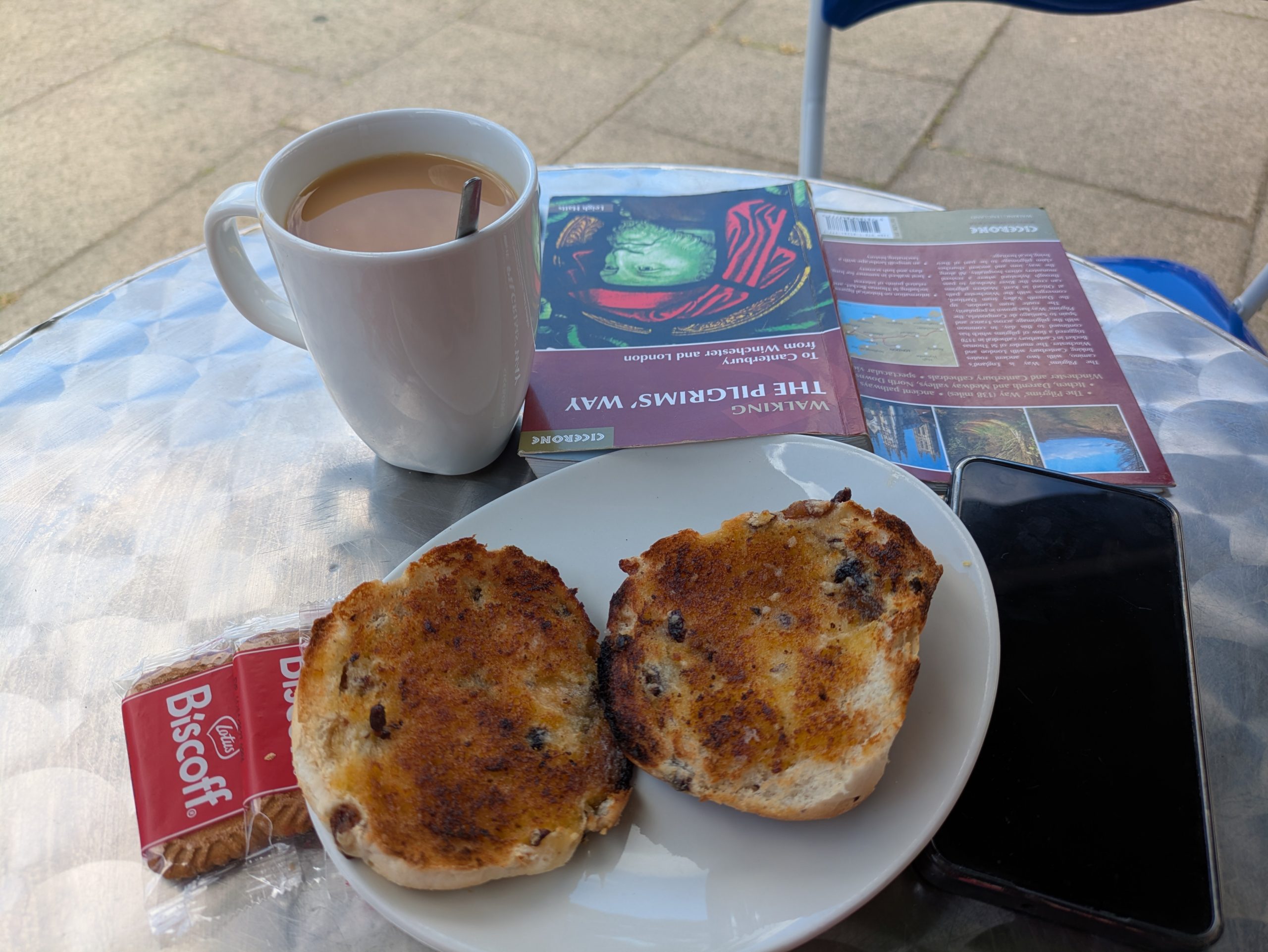
A circular walk always has a way back, whether that’s to the car, the café where you started or even the familiar version of yourself still waiting at the end. Walking towards a different end point removes the safety net; there’s nowhere to retreat to, and I don’t think any of us at any point even thought about looping back. We had trust that the plan, our bodies, our friendship and the landscape would hold us until we arrived. Each day built on the last, with ideas and conversations carried over and developed. It felt like we were continually gathering and accumulating together. The walk was generative. And unlike when you walk in a loop, the end point was joyfully unfamiliar. We were giddy as we approached Canterbury’s city gates and basked in a collective confidence, cultivated over the course of our journey together, which enabled us to step purposefully towards the unknown.
Land and learning
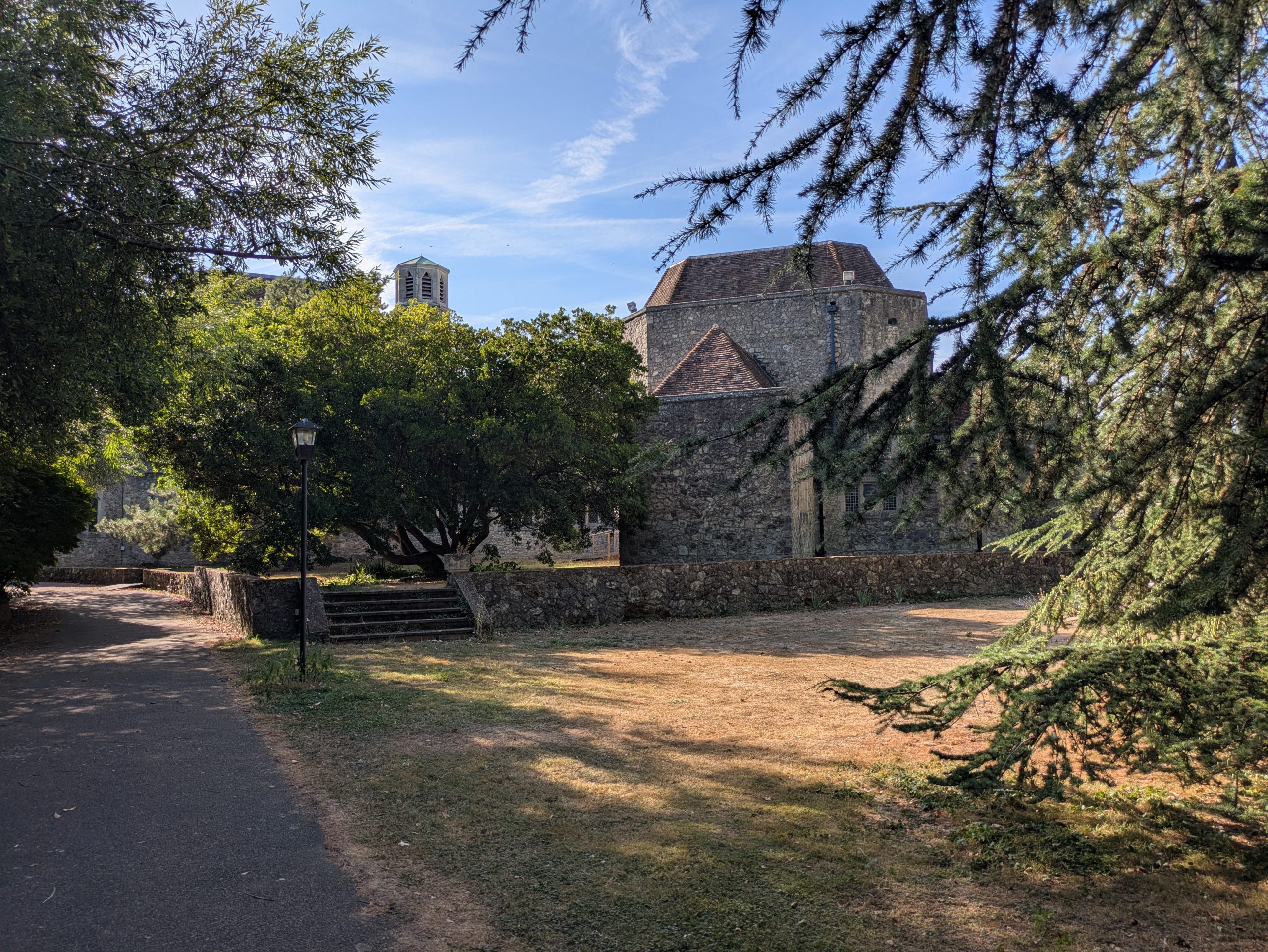
Human history is tied to the land, and I carried imagery and reflections from the TV series Detectorists while I walked and hummed the theme tune for a good while. My companions tolerated this graciously! Kent is known as the ‘Garden of England’ and we journeyed through harvested crops I didn’t recognise (oats, it turns out), orchards, vineyards, woodland with elder berries and hedgerows offering blackberries which ended up smeared around our mouths. We discovered fields sown with crops to combat soil erosion (another learning, Lacy phacelia), and we held gratitude for the trees which provided us with a canopy of shade from the hot summer sun. We startled deer in the North Downs Way, gazed skyward at birds of prey, followed rare and meandering chalk streams and even tracked the industrious River Thames. This, I recognised, is the stuff that matters.
Journalling
Journalling is a practice I imagined I ought to enjoy, but I never quite knew how to approach a blank page, surprising, maybe, given I’m a coach who engages in reflective practice regularly. Somehow journalling has always felt a bit indulgent and too much of a commitment. With eight days of walking ahead, I decided I could manage a daily practice, buddying up with a friend doing the same, and another who sent us reflective questions to consider en route. I told myself it’s OK to write just a few sentences and that it doesn’t need to be a masterpiece, it was just for me and didn’t need to be linear or even make sense! By the time a friend sent me the ‘are you spiritually uplifted’ question on a day three, I was all in! I found doodles and mind maps helped and I’ve managed for the most part to shed the all-or-nothing thinking which got in my way before. It’s by no means an every day event, and that’s OK. Journalling is something I now get excited about, it’s a a real treat to myself.
Simplicity
There’s pleasing simplicity in walking with everything you need on your back and the privilege of being able to cast off the mundane and tedious aspects of modern living. The decisions we needed to make were fewer and the space for creative thinking, laughing and silence greater. I enjoyed what became our evening ritual of washing through clothes and unpacking bags and the accompanying morning one in reverse. It got me thinking about ritual and how it compares to the kind of repetition that can feel tedious and a little bit soul destroying. It’s something I intend to journal about! I’d love to hear your thoughts.
Spirituality
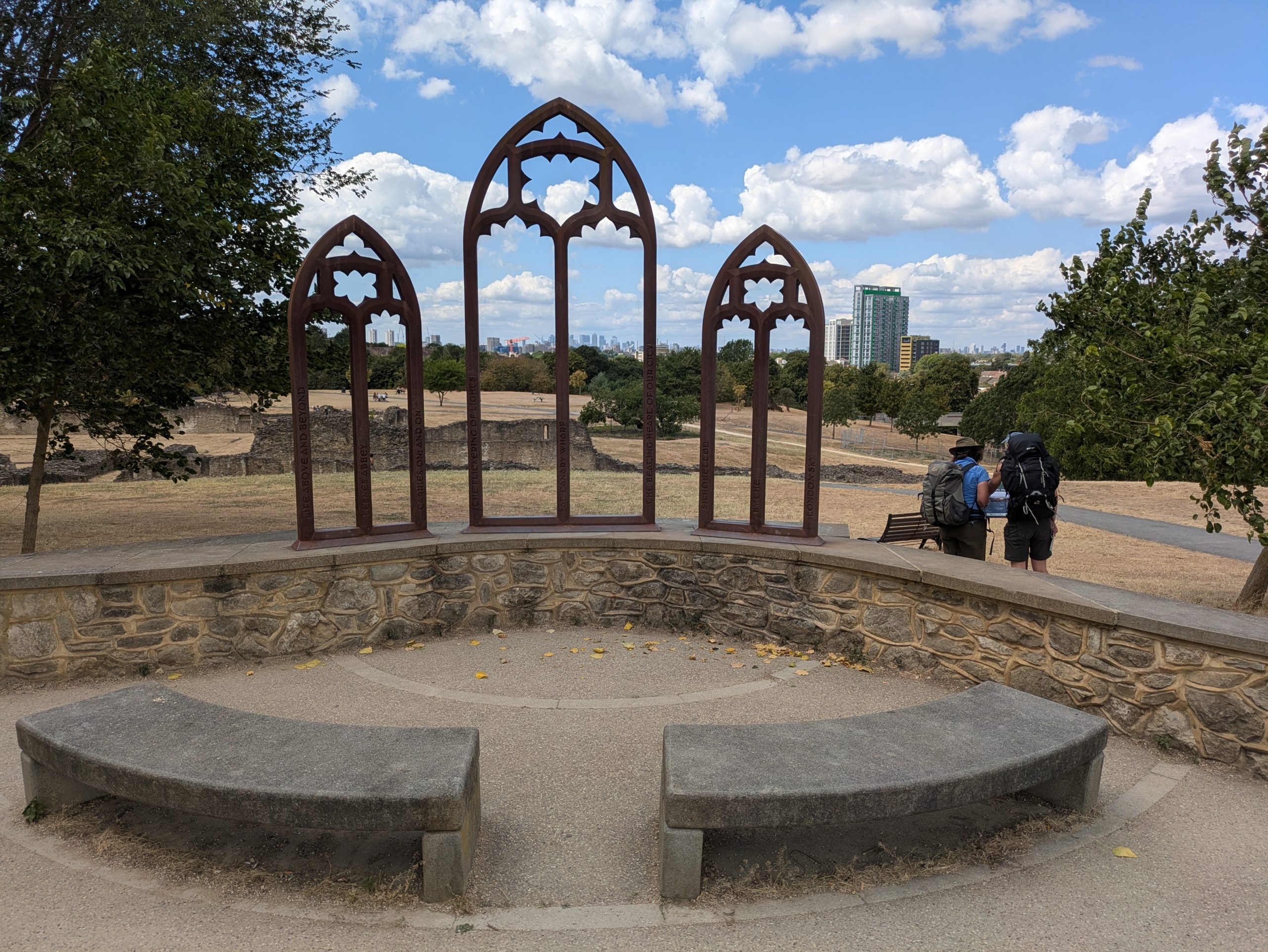
So in answer to the earlier journal prompt, do I feel spiritually uplifted yet? I’m still not sure what that means. What I do know is that putting one foot in front of the other for eight days has grounded me in a deep connection with the earth and with a fine community of women, their curiosity, love and friendship. I’m in awe of the centuries of human creativity and ingenuity that have come before us and know I am a tiny droplet in the continuous cycles of the natural world of which humanity is a tiny, significant part. I spent ten days feeling like me. No external expectations, no judgement. I hold a stronger sense of who I am and who I am becoming. I am walking into myself.
A final reflection
My purpose for the pilgrimage wasn’t specific when I set out but I knew I wanted to be open and receptive to whatever might emerge. I lost my dad unexpectedly in January and hoped the physical act of walking would help me process that a little.
Perhaps I imagined that come September, which always feels like the new year to me, I’d have a clearer sense of my next steps because of the walk. Beyond these two things, and true to the Pilgrimage Trust’s definition, I set off with no real expectations, only trust: in friendship and in myself. The question now is what I do with it.
Part two next Friday! To read it first, subscribe to my newsletter, Consciously Connected
One thought on “So what makes a walk a pilgrimage?”